Table Of Content

Back9 Design uses Solidwork's 3D CAD software platform for product designs. It also supports Pro-E and AutoCAD legacy projects, and uses Adobe Illustrator for graphic design requirements. Autodesk Fusion is leading the field with its innovation and breadth of features that push the boundaries of product development.
Kwong Von Glinow integrates model making into its design process - The Architect's Newspaper
Kwong Von Glinow integrates model making into its design process.
Posted: Wed, 01 Nov 2023 07:00:00 GMT [source]
Step 1: Inquire and analyze

You should discover everything you can about your users and the market you’re targeting. If you don’t already have the essential data, this should be the first step you take because all following actions are dependent on it. The design cycle is a combination of steps that lead from a design idea to a finished product. Although every designer may approach a problem in a different way, some general steps are common to all of us. These design steps form a design cycle, which underpins the design process. Student teams design, build and test small-sized gliders to maximize flight distance and an aerodynamic ratio, applying their knowledge of fluid dynamics to its role in flight.
Let’s Drive Results Together!
The user testing involves gathering valuable feedback from book enthusiasts and potential customers, allowing you to fine-tune the website based on their experiences. For your online bookstore project, the product discovery phase involves setting clear goals—providing a seamless user experience, catering to book enthusiasts, and competing in the online market. Understanding your target audience—avid readers, book lovers, and students—is key. You conduct a thorough market and competitor analysis, identifying gaps and opportunities. Detailed documentation captures these insights and acts as a reference throughout the project.
Ideate
Given a list of constraints, including a device weight limit and minimum load capacity, groups brainstorm ideas and then make detailed plans for their best sol... As the first engineering design challenge of the unit, students are introduced to the logic for solving a maze. Student groups apply logic to program LEGO® MINDSTORMS® EV3 robots to navigate through a maze, first with no sensors, and then with sensors. Student groups are challenged to program robots with color sensors to follow a black line. Learning both the logic and skills behind programming robots for this challenge helps students improve their understanding of how robots "think" and widens their appreciation for the complexity involved in pro...
And another essential advantage of working with the design cycle is that the team avoids the “tunnel effect” during development. That is, even if the original specifications are exceeded, or the customer’s need has changed or was poorly expressed, the team can always go back to previous steps and make changes. Thus, the design cycle works great with changes, which is its strong point.
The average first prototype will be altered and changed numerous times before the design cycle is completed. As a result, your first prototype should be functional but not visually polished. Its major goal is to serve as a jumping off point for examination and testing. Because design is an iterative cyclical process, the cycle automatically repeats itself.
Degree programs
At this stage, you’ll figure out the market state, whether any competing products exist or are on their way, and what user needs competitors neglect. That’s the moment to visualize your idea through various drawings, diagrams, and storyboards. You can design user flows, capture user personas, and create user journeys that you will rely on when creating the UX/UI design of your product.
Students explore the engineering design process within the context of Dr. Seuss’s book, Bartholomew and the Oobleck. Students study a sample of aloe vera gel (the oobleck) in lab groups. After analyzing the substance, they use the engineering design process to develop and test other substances to ma... Students pretend they are agricultural engineers during the colonial period and design a miniature plow that cuts through a "field" of soil. They are introduced to the engineering design process and learn of several famous historical figures who contributed to plow design. Students use the engineering design process to design a bridge out of silkworm cocoons that can hold at least 50 grams.
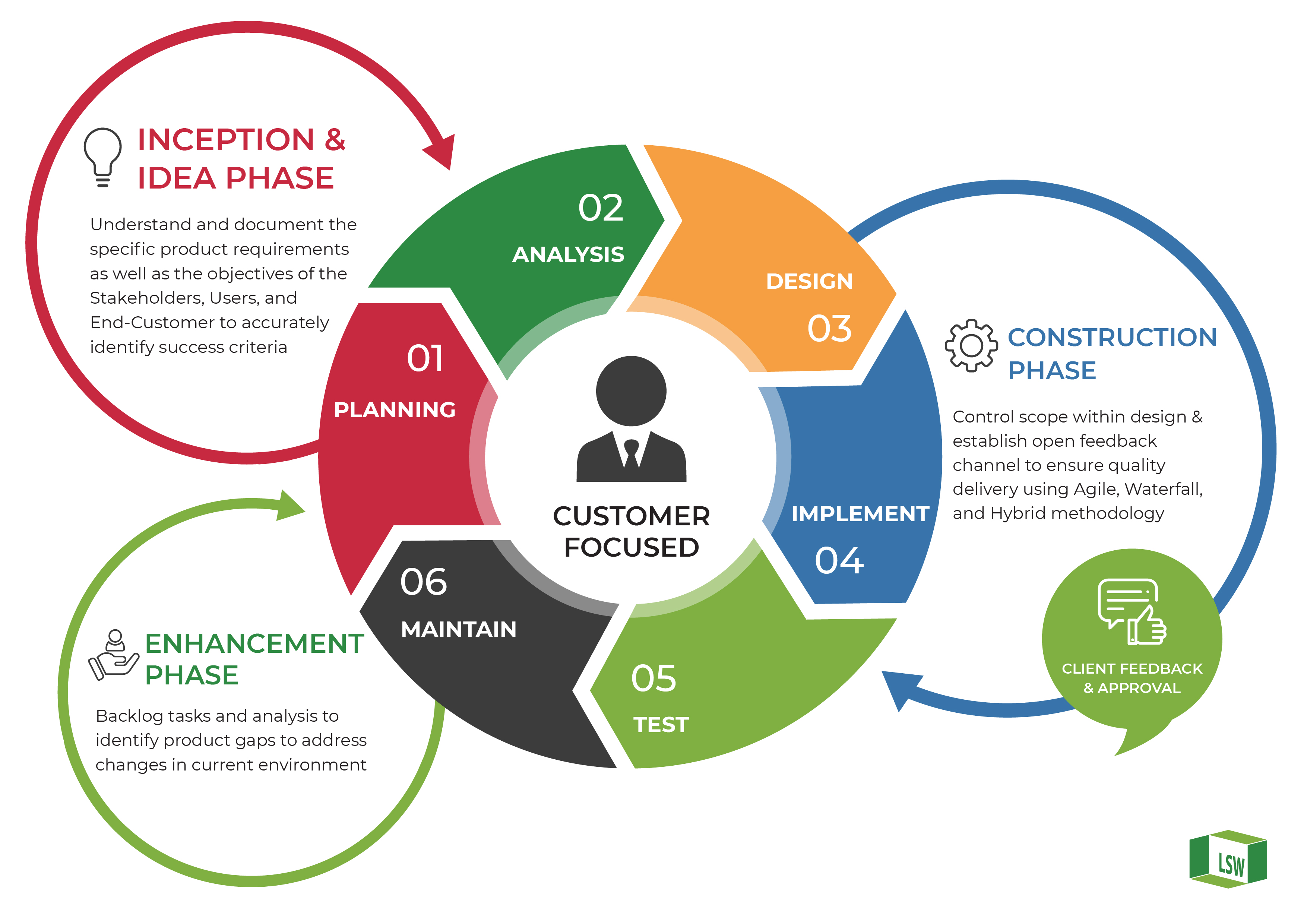
The life cycle design in project management stems from the agile model theorized in the 1990s, making it possible to represent development processes in a cycled manner and successive phases. This project management model was developed in the 1990s, applied to industrial projects, and then extended to IT projects. Once you’ve determined how to improve your design (and written it all down), it’s time to repeat some of the design cycle processes and improve the design. When creating your design plan, you’ve thought about which testing methods you’re going to use to evaluate your prototype. However, these steps do not have to be completed in a set pattern. In some cases, you’ll have to start again, while in others you’ll have to jump ahead.
From a production perspective, this is one of the most complex BSPDN implementations and is more complex than Intel's Power Via. Once the investigation is planned, a scientist begins collecting data, also called evidence. Data can be evidence collected directly by a scientist through observation, qualitative data, and/or quantitative measurements or data collected by other people (such as participatory science data). It’s common for scientists to collect different types of evidence in investigations.
Design thinking is a methodology which provides a solution-based approach to solving problems. When you know how to apply the five stages of design thinking you will be impowered because you can apply the methodology to solve complex problems that occur in our companies, our countries, and across the world. To sum up, the design process is a continuous loop where ideas evolve, solutions improve, and products transform over time. It’s a dynamic cycle that involves research, development, testing, and launch, creating an ever-evolving journey.




No comments:
Post a Comment